Media can be manipulated in a multitude of ways, and one of those ways is called a deepfake. Deepfake combines deep learning and fake artificial intelligence to learn the many unique visual or oral characteristics of a subject and map that information onto another subject. This form of artificial intelligence has taken social media by storm through applications that allow you to deepfake actors or influential people to the mapping of art shows to create new visual experiences. One interesting form of deepfake that I have seen is the manipulation of Vincent Van Gogh’s artwork to create a unique visual take on his art. One example can be found at https://www.instagram.com/p/CL_Ee8Ejkq6/?utm_source=ig_web_copy_link, and while it is a remarkable interpretation of Van Gogh’s art, it is also a manipulation that utilizes AI.

The idea of using this deepfake came to me when I recalled that I had seen a video of a deepfake that was made of many influential artists. One of these influential people was Van Gogh, but since I could not find that video, I opted to look at the manipulations that have been created from his art to create a new form of art installation. I chose this form over false or misleading media because I was having difficulty finding something that I could also find the original un-manipulated content of, and I found that searching for “fake news” did not boost my overall mood. However, the manipulation of Van Gogh’s art is something I am very impressed with and find inspiring.
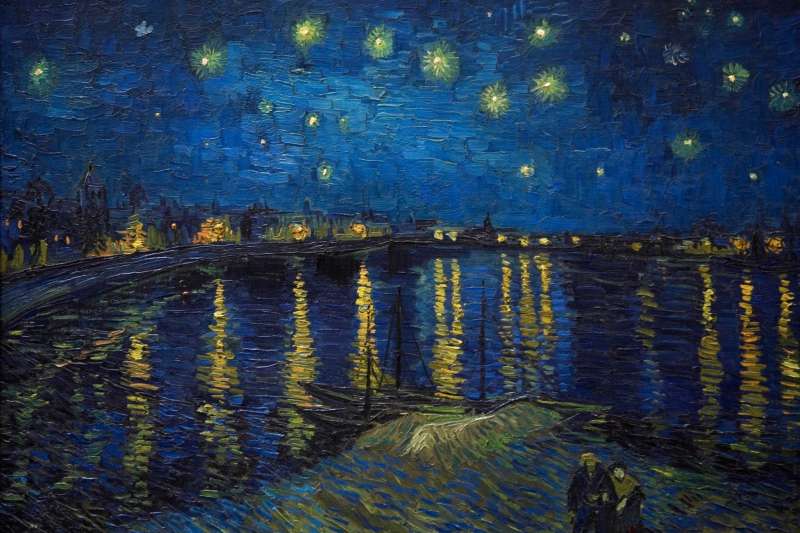
Above, you will see an image of Starry Night Over the Rhône by Vincent Van Gogh, which I found in an article by Ramirez (2017) titled “Gallery: What Van Gogh’s most famous paintings look like in real life.” It matches the manipulated media found within the Instagram video of the Vincent Van Gogh art installation that is enhanced by AI. The Instagram video that I found has had over 2,000 engagements, but this video is not from the @vangoghmuseum, which has 2 million followers, or the @vangogh.experience, which has 121K followers. Instead, the experience is where Van Gogh’s art comes to life through AI.
The audience obviously realizes that this “new” installation is altered, but it is largely accepted as a new way to experience famous art. While it is not the original artwork, it creates a way for people to immerse themselves within the artwork. On the other hand, it does not allow a person to see the individual brushstrokes and the time put into creating the original art. Due to this fact, I think it is vital for people to realize how influential AI and media are on our perceptions and the way we view the world around us. We must remember to enjoy not only the creations of the future but also those of the past. Through an appreciation of the past, we are forced to reflect on life’s original, un-manipulated facts.
References
Ramirez, F. (2017, August 8). Gallery: What Van Gogh’s most famous paintings look like in real life. Chron. Retrieved November 4, 2021, from https://www.chron.com/news/slideshow/Gallery-What-Van-Gogh-s-most-famous-paintings-160505.php.
 Will Ardently Pursue